
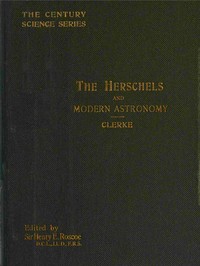
The Herschels and Modern Astronomy by Agnes M. Clerke
Agnes M. Clerke's book is less a dry historical account and more a guided tour through the workshop and lives of the most remarkable sibling duo in science. It follows William and Caroline Herschel, who arrived in England from Germany in the late 1700s. William, a musician by trade, became consumed by astronomy. He started building his own telescopes, each one bigger and more powerful than the last, in a constant quest to see deeper into space.
The Story
The 'plot' is their lifelong project. With Caroline meticulously recording his observations and later making her own, William discovered the planet Uranus—the first new planet found since antiquity. This catapulted them to fame. But they didn't stop. They began a monumental survey of the entire night sky, cataloging thousands of star clusters and nebulae (what we now know are galaxies). Caroline's role evolved from note-taker to a dedicated hunter of comets. The story is in the details: the endless polishing of metal mirrors, the dangerous construction of a 40-foot telescope, the winter nights Caroline spent scanning the heavens, and the gradual, painstaking assembly of a new picture of a dynamic, structured universe far beyond our solar system.
Why You Should Read It
What makes this story sing is its humanity. Clerke, writing in the 1890s, had a deep respect for her subjects and access to their letters and notes. She shows us their frustrations, their breakthroughs, and their unshakable partnership. You feel the physical labor of their science. This isn't about abstract genius; it's about skill, patience, and teamwork. Caroline's journey is particularly compelling—a woman who carved out a brilliant scientific career from a role that was supposed to be purely domestic. The book makes you look up at the night sky and realize that much of what we know started with two people in a garden, refusing to accept the limits of what they could see.
Final Verdict
Perfect for anyone who loves stories about underdogs, fascinating families, or the real, gritty work behind great discoveries. If you enjoy biographies like 'The Immortal Life of Henrietta Lacks' or 'Hidden Figures,' you'll find a similar spirit here—a celebration of overlooked contributors and the passion that drives discovery. It's also a great pick for amateur astronomers who want to know the origins of their hobby. While it's a historical text, Clerke's writing is clear and full of admiration, making a 19th-century science book feel surprisingly immediate and exciting.
This work has been identified as being free of known copyright restrictions. Use this text in your own projects freely.
Kimberly Miller
7 months agoI started reading this with a critical mind, the way the author breaks down the core concepts is remarkably clear. Truly a masterpiece of digital educational material.
Ashley Gonzalez
7 months agoIf you enjoy this genre, it challenges the reader's perspective in an intellectual way. A true masterpiece.
Andrew Perez
5 months agoLoved it.




Robert Jackson
1 year agoHaving followed this topic for years, I can say that the structural organization allows for quick referencing of key points. Definitely a five-star contribution to the field.