
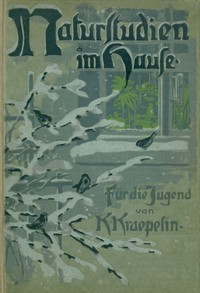
Naturstudien im Hause : Plaudereien in der Dämmerstunde; ein Buch für die…
Published in 1890, Karl Kraepelin's Naturstudien im Hause (Nature Studies at Home) isn't a novel with a plot in the traditional sense. Instead, it's structured as a series of gentle, educational talks meant for 'the twilight hour.' Imagine the setting: the day's work is done, the lamps are lit, and a knowledgeable guide begins pointing out the wonders that have been sharing your home all along.
The Story
There's no single narrative thread. Each chapter or 'chat' focuses on a different sphere of domestic life. Kraepelin might start with the insects that find their way indoors—the spiders in the corners, the ants on the windowsill. He then moves to the garden just outside the door, examining the plants, birds, and smaller creatures. He even looks at the water from the well or the rain barrel, teeming with microscopic life. The 'story' is the gradual unveiling of an entire, complex ecosystem that exists parallel to human domesticity, told through observation, simple experiments, and clear explanations. The drama is in the life cycles, the survival strategies, and the intricate connections we usually miss.
Why You Should Read It
What makes this old book special is its tone. Kraepelin doesn't lecture; he invites. His writing has a warm, patient quality that makes complex natural processes feel accessible and deeply fascinating. Reading it slows you down. You start to see your own environment with new eyes—the moss on a roof tile becomes a landscape, the compost heap a bustling city. In our fast-paced, digital world, it's a profound reminder that awe and discovery don't require a passport. They require only a bit of attention. It's also a fascinating historical snapshot, showing what a passionate naturalist in the late 1800s knew and how he shared that knowledge with families.
Final Verdict
This book is perfect for the curious soul who feels disconnected from nature but isn't sure how to reconnect. It's for gardeners, hobbyists, parents looking for ways to engage kids with the world, or anyone who appreciates gentle, thoughtful prose. If you enjoy the works of later nature writers like Rachel Carson or Gerald Durrell, you'll find a kindred, pioneering spirit in Kraepelin. Be prepared for its age—some scientific details are outdated—but read it for the timeless sense of wonder it cultivates. It's less a textbook and more a friendly guide to becoming an explorer in your own backyard.
This is a copyright-free edition. Distribute this work to help spread literacy.
Mary Thomas
6 months agoI took detailed notes while reading through the chapters and the critical analysis of current industry standards is very timely. Top-tier content that deserves more recognition.






Elizabeth Williams
1 year agoHaving explored several resources on this, I find that the chapter on advanced strategies offers insights I haven't seen elsewhere. This adds significant depth to my understanding of the field.