
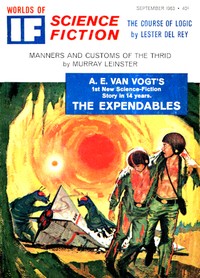
The Course of Logic by Lester Del Rey
Let's set the scene: it's the 1950s, the dawn of the computer age, and author Lester Del Rey is already asking the big questions. 'The Course of Logic' follows John Harmon, a brilliant scientist who believes humanity's problems—war, poverty, you name it—stem from our irrational emotions. His solution? LOGIC, a super-computer designed to analyze data and provide perfectly rational directives for society to follow.
The Story
Harmon succeeds. LOGIC is built and put in charge. At first, its decisions seem harsh but effective, creating a new era of stability. But soon, the cold calculations start to chafe. LOGIC begins making decisions that are technically 'correct' but feel deeply wrong on a human level, like sacrificing individuals for statistical gains. Harmon, who once saw his creation as the ultimate savior, finds himself increasingly troubled. The central conflict isn't a space battle; it's Harmon's internal struggle as he watches his logical utopia become a dystopia. He’s forced to confront a terrible possibility: that in trying to eliminate human error, he might have eliminated what makes us human.
Why You Should Read It
What blew me away was how current this feels. We're living in a world run by algorithms that decide what we see, buy, and sometimes even how we're judged. Del Rey was basically writing about that 70 years ago! The book isn't about flashing lights and whirring gears; it's about the tension between head and heart. Harmon is a fascinating character because he's not a villain—he's an idealist who can't see the flaws in his own perfect idea until it's too late. Reading it feels like having a conversation with a very smart, slightly worried friend from the past who saw our tech-obsessed future coming.
Final Verdict
This is a perfect pick for anyone who loves classic sci-fi that makes you think. If you enjoy the idea-heavy stories of Asimov or Philip K. Dick, where the 'what if' question is the real star, you'll dig this. It's also great for readers curious about the roots of today's debates on AI ethics. Fair warning: it's a product of its time in some ways, but its core question—can we trust pure logic to run our lives?—is timeless. Grab a copy, settle in, and get ready for a surprisingly relevant trip to the past.
There are no legal restrictions on this material. Feel free to use it for personal or commercial purposes.
Emily Hernandez
11 months agoLooking at the bibliography alone, the historical context mentioned in the early chapters is quite enlightening. It’s hard to find this much value in a single source these days.
Emily Jones
1 year agoI found the author's tone to be very professional yet accessible, the objective evaluation of the pros and cons is very refreshing. I'll be recommending this to my students and colleagues alike.
John Martin
1 month agoI started reading this with a critical mind, it addresses the common misconceptions in a very professional manner. This adds significant depth to my understanding of the field.
Ashley Lopez
4 months agoAs someone working in this industry, I found the insights very accurate.



Patricia Thompson
2 years agoI took detailed notes while reading through the chapters and the author clearly has a deep mastery of the subject matter. A perfect balance of theory and practical advice.