
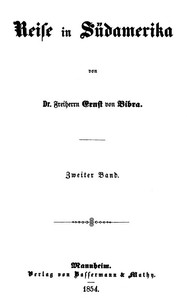
Reise in Südamerika. Zweiter Band. by Freiherr von Ernst Bibra
Let's be clear from the start: this isn't a novel. 'Reise in Südamerika. Zweiter Band.' is the second volume of Baron Ernst von Bibra's real-life travel diaries from the 1850s. But don't let that fool you into thinking it's dry. This is an on-the-ground report from the edge of the known world, written by a man with a chemist's eye and an adventurer's spirit.
The Story
There's no single plot, but there is a clear journey. We follow Bibra as he moves through the dramatic landscapes of 19th-century South America. One chapter he's meticulously detailing the chemical properties of local plants. The next, he's describing the terrifying majesty of an earthquake or the surreal experience of chewing coca leaves in the high Andes to stave off altitude sickness. He observes everything—the workings of silver mines, the social customs in remote villages, the staggering biodiversity. The 'story' is the cumulative effect of these encounters. It's the portrait of a continent being pieced together, observation by observation, by a deeply curious outsider.
Why You Should Read It
I loved this book because it's so honest. Bibra doesn't pretend to have all the answers. You can feel his European framework straining under the weight of new experiences. His writing is direct and often surprisingly relatable. He's amazed, confused, exhausted, and fascinated in equal measure. Reading it today offers a double insight: you learn about South America in a pivotal era, but you also get a front-row seat to the 19th-century scientific mind at work. It's history without the filter of a modern textbook. The real magic is in the small details—the taste of unfamiliar food, the difficulty of a mountain pass, a casual conversation with a local guide. It makes the past feel immediate and tangible.
Final Verdict
This is a perfect pick for readers who enjoy immersive history, armchair travel, or classic exploration narratives. If you liked the firsthand accounts in books like The River of Doubt or the curious, personal tone of Bill Bryson's adventures, you'll find a kindred spirit in Baron von Bibra. It's not a fast-paced thriller; it's a slow, rich journey. You need a little patience to settle into its rhythm, but the reward is a truly unique and personal window into a lost world. Just be prepared to start googling maps of 1850s South America—you'll want to follow along on his incredible trek.
The copyright for this book has expired, making it public property. Share knowledge freely with the world.



George Miller
1 month agoThis digital copy caught my eye due to its reputation, the argument presented in the middle section is particularly compelling. It’s hard to find this much value in a single source these days.